
Most people only think about their boiler when it stops working, usually on the coldest morning of the year. A boiler that gets a little attention in every season is far more likely to run quietly, safely, and efficiently when you need it most. This calendar breaks the year into simple tasks, so scheduling dependable Clackamas boiler service becomes a habit instead of an emergency.
Late Summer: Plan Ahead
The off-season is the best time to get ahead of problems. Demand for repairs is low, and you have time to fix things properly instead of rushing.
- Book a professional inspection. A technician can check the burner, heat exchanger, venting, controls, and safety devices.
- Note any warning signs from last winter. Strange noises, uneven heat, or frequent restarts are worth mentioning.
- Look at the age of your system. If the boiler is approaching the end of its expected life, now is the time to start planning rather than waiting for a failure.
Early Fall: Prepare the System
Before the first cold snap, walk through a quick home checklist:
- Clear the area around the boiler of boxes, paint cans, and anything flammable.
- Check the pressure gauge. Most residential systems have a recommended range printed on the unit or in the manual.
- Bleed air from radiators if some feel cool at the top.
- Make sure your carbon monoxide detectors have fresh batteries and test them.
- Inspect visible pipes and fittings for drips, rust, or mineral buildup.
These small checks take less than an hour, and they often reveal a minor issue before it turns into a no-heat call.
Midwinter: Watch and Listen
Once the boiler is running hard, your job is to notice changes. Pay attention to:
- Sounds. Banging, whistling, or gurgling can point to trapped air, low water, or scale buildup.
- Heat distribution. Rooms that stay cold may indicate air in the lines, balance problems, or a failing circulator pump.
- Water around the unit. Even a slow leak should be looked at quickly.
- Flame appearance. A steady blue flame is normal for gas. Yellow or flickering flames need immediate professional attention.
- Thermostat behavior. If the system short cycles, turning on and off too frequently, something may be wrong with sizing, controls, or water temperature.
If you smell gas or suspect a carbon monoxide problem, leave the house and call your gas utility or emergency services right away. Do not try to fix it yourself.
Spring: Review and Reset
When the heating season ends, the boiler deserves a short review of how it performed:
- Did the house heat evenly?
- Did the system run more often than usual?
- Did your gas bills climb without a matching change in weather?
Write down your answers. They help your technician spot slow-developing issues, and they make the next fall tune-up more focused.
Why Efficiency Matters in Your Planning
Maintenance keeps an existing boiler healthy, but eventually every system reaches a point where replacement makes more financial sense. The ENERGY STAR boilers page offers a helpful benchmark: certified boilers have an AFUE rating of 87 percent or higher for oil models and 90 percent or higher for gas models, and they achieve that with features such as electronic ignition, advanced combustion technology, and sealed combustion. The same page estimates that a certified gas boiler can save about $780 over its lifetime. Savings will vary with your home and usage, but the numbers give you a useful starting point when comparing a repair against an upgrade.
Repair or Replace? A Quick Guide
Consider replacement if several of these apply:
- The boiler is well past its typical service life.
- Repairs are becoming frequent or expensive.
- Your fuel bills keep rising even though your habits have not changed.
- Parts for your model are hard to find.
- The unit has a cracked heat exchanger or significant corrosion.
A good technician will lay out your options honestly and give you a clear cost comparison, so you can decide with confidence.
What a Professional Visit Usually Covers
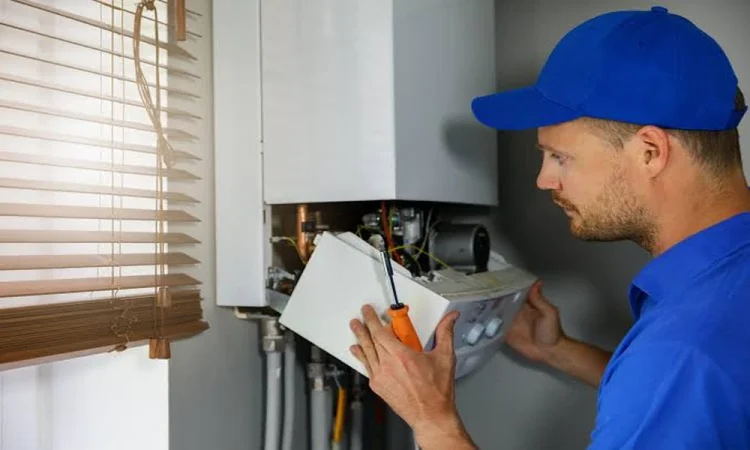
A thorough service call typically includes:
- Inspecting and cleaning the burner and combustion area
- Checking the heat exchanger for cracks and buildup
- Testing safety controls and pressure relief valves
- Examining vents and flue connections for blockages or leaks
- Measuring combustion performance
- Checking the circulator pump, expansion tank, and system pressure
- Reviewing thermostat and control settings
Ask for a written summary of what was checked and what was found. It becomes a useful record for the life of the system.
Final Thoughts
A boiler does not need constant attention, just the right attention at the right time. Plan in late summer, prepare in early fall, watch and listen in winter, and review in spring. Follow that rhythm each year and you will protect your comfort, your safety, and your budget while getting the most out of your equipment.