

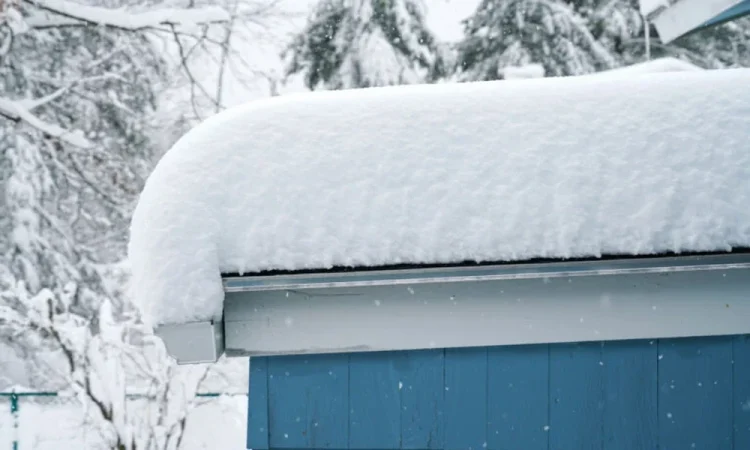
Most people picture winter roof damage as one dramatic moment: a huge storm drops too much snow and something gives way. That does happen, but it is rare. Far more often, winter wears a roof down slowly, from several directions at once. Weight presses from above. Heat escapes from below. Wind pushes sideways. Water creeps into tiny gaps, freezes, and pries them open a little wider every night.
Roofers who work through long mountain winters, including the crew at SRD Roofing, often find that the leak a homeowner discovers in April began months earlier with something small. It might be a lifted shingle, a cracked vent boot, or an attic that runs a few degrees too warm. By the time a stain shows up on the ceiling, the cause has usually been working for most of the season.
Knowing how each of these forces behaves makes it much easier to spot trouble early. It also helps you tell the difference between a problem you can watch and one that needs attention now.
The Weight You Can See
Snow weight varies far more than most homeowners expect. A foot of light, fresh powder weighs relatively little. The same depth of wet, packed snow can weigh several times more, and a layer of ice heavier still. When rain falls on an existing snowpack, the snow soaks it up like a sponge, and the load on the roof can jump in a single afternoon.
Weight also rarely spreads evenly. Wind piles drifts on the sheltered side of a ridge. Valleys collect snow sliding off two slopes. A lower roof sitting below a taller section, such as a garage beside a two story house, catches whatever slides off above it. These are the spots where structural stress concentrates.
Connecticut’s emergency management division keeps a snow load safety page that points to FEMA’s guidance on recognizing overstress. Inside the home, the warning signs tend to look like this:
- Interior doors on the top floor that suddenly stick or will not latch
- New cracks in drywall or plaster, especially near the ceiling line
- A visible sag in the ceiling or along the roofline
- Creaking, popping, or cracking sounds that were not there before
If you notice any of these, the safest move is to get people out of the affected area and call a professional. Climbing onto a snow covered roof to shovel it is one of the most common ways homeowners get hurt in winter. A long handled roof rake used from the ground can clear the lower few feet of a sloped roof, but anything beyond that belongs to someone with proper gear.
The Heat That Leaks Up
Ice dams are the winter problem homeowners see most often, and they start inside the house rather than on the roof. Warm air leaks into the attic through gaps around light fixtures, plumbing stacks, attic hatches, and wall top plates. That heat warms the roof deck enough to melt the snow sitting on it. Meltwater runs down the slope until it reaches the eaves, which hang out past the warm part of the house and stay cold. There it freezes again.
Over days and weeks, that frozen ridge grows. Water collecting behind it has nowhere to go, so it backs up under the shingles and finds its way into the soffits, walls, and ceilings. Big icicles along the gutter line are usually the most visible clue.
Heat cables and chipping away ice treat the symptom. The lasting fix is sealing the air leaks between living space and attic first, then adding insulation. A short ice dam guide from Massachusetts recommends a home energy assessment to find those leaks instead of simply reacting to the ice. Ventilation matters too, but it works best once the attic floor is properly sealed.
Wind Works Sideways
Mountain regions get strong winds, sometimes in sudden warm gusts that roll down off the slopes. Wind does not need to tear a roof off to cause damage. It only needs to lift the edge of a shingle.
Asphalt shingles rely on a strip of sealant that bonds each course to the one below it. That strip needs warmth to activate. Shingles installed late in the fall may go into winter without ever fully sealing, which leaves them easier for wind to catch. Cold also makes shingles stiffer and more brittle, so a tab that flexes easily in July can crack in January. Once a tab cracks or lifts, wind driven snow and rain can reach the underlayment beneath it.
Wind also pushes fine snow into ridge vents and gable vents. That snow melts in the attic and can soak insulation without any obvious sign from outside.
Freeze and Thaw in Small Places
Water expands when it freezes. On a roof, that matters most in the small places: the seam where flashing meets a chimney, the rubber collar around a plumbing vent, a hairline crack in old sealant. Each freeze widens the gap slightly. Each thaw lets more water in. A region with dozens of freeze and thaw cycles each winter puts these details under steady pressure.
High elevation adds another factor. Sunlight carries more ultraviolet energy at altitude, and that speeds up the breakdown of rubber boots, sealants, and shingle surfaces. A vent collar that might last many years at sea level can dry out and split noticeably sooner in the mountains. Once it splits, winter does the rest.
What Spring Reveals
When the snow finally clears, the roof tells the story of its winter. A walk around the house on a dry day can reveal a lot without ever leaving the ground. Gutters that pulled away from the fascia under the weight of ice, shingle granules piled at the bottom of downspouts, and dark streaks below the eaves all point to places worth a closer look.
Inside, check the attic with a flashlight. Water stains on the underside of the roof deck, damp or compressed insulation, and frost marks around nails all show where heat and moisture were moving during the cold months. These clues are much easier to read in spring than in the middle of a storm.
The best time to act on what you find is the dry stretch between late spring and early fall. Repairs go smoother, materials bond properly in warm weather, and new shingles have time to seal before the first snow. A roof that heads into winter tight and well supported has a far better chance of coming out the other side with nothing more to show for it than a few loose granules.

