
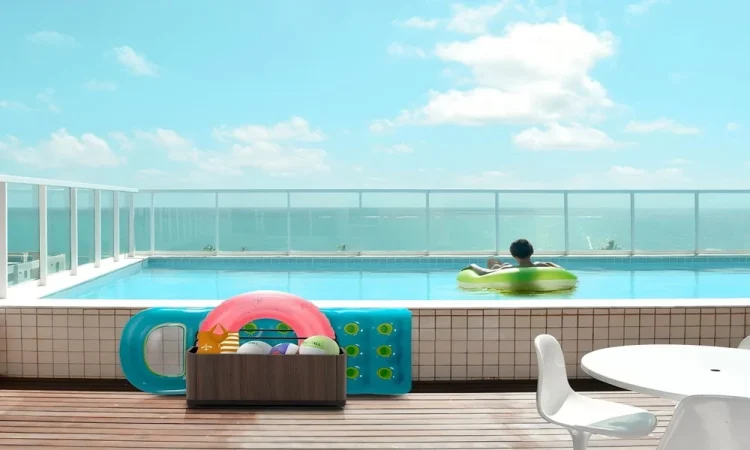
A pool towel needs more than a hook near the back door. It may begin the afternoon clean, be used several times, need drying and eventually return to the laundry. Planning those different moments helps keep a comfortable pool area from becoming a collection of damp textiles draped over furniture that was meant for sitting.
This is a small design decision with a frequent effect on daily life. A towel arrangement that works for one person may fail when the family swims together or guests arrive. Think through the routine before choosing a decorative rail, basket or outdoor cabinet simply because it looks suitable beside the pool.
Separate a fresh towel from one still being used
Start by deciding where clean towels will wait. That location should suit the textile and the conditions of the space, following the care information for the items involved. An open shelf shown in a sunny photograph should not automatically be treated as appropriate permanent storage in your own yard.
A towel set aside between swims needs a recognisable place. If everyone uses the same style, consider how household members will identify their own without unfolding several towels. Colour, position or another simple household convention can reduce confusion, provided the arrangement remains easy for visitors to understand.
Used towels headed for washing have a different destination again. Avoid making a basket perform every role at once, with fresh towels underneath and damp ones added above. The distinction need not require three pieces of furniture; it needs a clear routine that people can follow without being reminded every few minutes.
Discuss this with the people who handle the laundry. They may prefer used items to come indoors promptly, or have another established method that fits the household. An outdoor accessory should support that routine rather than create a second collection point that is easily forgotten after everyone returns inside.
Plan for the busiest towel moment
Count a realistic busy afternoon, including visitors if they are a regular part of pool use. Think about how many towels may be in use simultaneously and what happens when people finish at roughly the same time. An attractive rail with only one usable position can become overcrowded immediately.
Use actual towels when testing capacity. Thick or oversized items occupy a different amount of space from the neatly folded display textile shown with an accessory. You are looking for an arrangement that works with what the household owns, not trying to reproduce a styled product photograph.
Notice the distinction between hanging an item temporarily and giving it the space required by your intended drying method. Several towels can fit on a small hook while still forming one bulky pile. Follow their care guidance and choose a realistic destination rather than assuming that anything hung outdoors will take care of itself.
Think about reach and handling. The regular user should be able to put down or collect a towel without climbing on furniture or stretching across another object. If children use the pool, the arrangement still belongs within the household’s supervision routine; convenient towel storage does not make independent pool access appropriate.
Guest instructions can remain simple. Tell visitors where unused towels are and where to leave the ones they have finished with. A brief explanation at the beginning is kinder than correcting people after they have placed a wet towel on a cushion because no alternative was apparent.
Choose the drying destination before the accessory
Decide whether the normal drying process happens indoors, outdoors or in different places depending on the day. Weather, available space and textile instructions can affect that choice. Do not install a permanent outdoor fixture around a routine the household will abandon whenever the conditions change.
For an outdoor option, consider the location when the patio is fully occupied. A freestanding rack should not consume the passage needed to move between seating and the house. A wall-mounted item raises separate questions about the surface and suitable installation, which should be handled with the appropriate product guidance and professional input.
These modest household details can be included when planning the everyday pool landscape with Jameson Pool & Spa. Its design material includes furniture placement among the considerations for a backyard. Explain the towel routine during a Mississauga or Oakville design discussion so the intended location can be reviewed within the wider arrangement.
Keep accessories clear of pool barriers and their function. Health Canada’s pool-safety advice says to keep garden furniture and tools away from the fence because children can use them to climb. Have the proposed rack, cabinet or other furnishing considered with the actual barrier rather than choosing its position solely for convenience.
If the item will be moved routinely, understand the manufacturer’s handling and stability instructions. A product described as portable still needs a suitable place in each position. Do not depend on an improvised weight or attachment to make an unsuitable accessory work near the pool.
Make the route back indoors easy to repeat
Follow the final trip of the afternoon. Someone gathers the used textiles, brings them through an entrance and puts them in the agreed place for care. Notice whether this requires moving furniture, searching for a container or crossing the main seating area with a dripping bundle.
Adjust the routine before adding more equipment. Sometimes a clearly identified collection point and a regular end-of-use habit solve the problem. In other homes, the missing element is a suitable place near the indoor laundry process. The most visible outdoor accessory may not be the one that helps.
Try the proposed arrangement through an ordinary afternoon before committing to permanent fittings. Watch where towels actually end up and ask why. If people repeatedly choose the sofa, the intended alternative may be too distant, crowded or unclear. Let that observation improve the plan, then buy only the accessories that make the easier routine possible.