

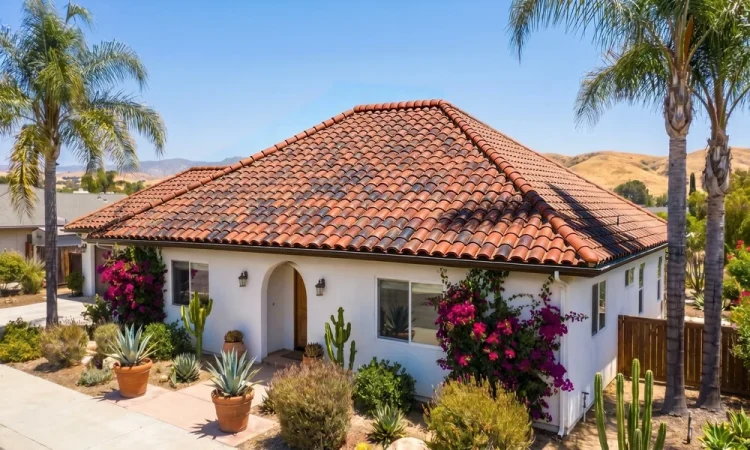
Stand near the top of Temple Hills or along Skyline Drive and look down. What fills the view is not storefronts or front doors. It is roofs, hundreds of them, stepping down the canyons toward the water. In most towns a roof is something you glance at from the street. In Laguna it is often the first thing a neighbor sees from the kitchen window every morning.
That change in perspective matters most when a homeowner decides the old material has to go and something different should take its place. Tile coming off in favor of metal. A tired shake roof giving way to synthetic slate. A flat section over the garage rebuilt with a new membrane. Each switch touches fire safety, salt exposure, structure and the look of a hillside all at once.
Owner Jeff Ray started his family run company in San Clemente in 1989, and its crews now handle Laguna Beach residential roofing in tile, composition shingle and standing seam metal, the last being the material the company treats as its specialty. That range is useful context, because the right replacement on a canyon lot is rarely the right one on a bluff two miles away.
Why People Stop Living With the Old Roof
The reasons tend to fall into a few familiar groups. Some owners inherit a roof that no longer fits the town, such as wood shake on a canyon edge, a choice that feels very different after the 1993 fire that destroyed 441 homes here. Others want to shed weight before adding solar panels. Some live on exposed ridges where salt and wind keep chewing through flashing every few years, and they want something that asks for less attention. And plenty are simply remodeling, so the roof has to follow a new architectural direction for the whole house.
Knowing which group you belong to shapes every choice that follows.
Three Tests Before Anything Else
Every candidate material has to clear the same three hurdles in Laguna, and failing any one of them usually rules it out.
- Fire. Much of the city lies in designated fire hazard areas, so a Class A rated assembly is the practical starting point. On canyon lots, ember resistant vents and closed eave ends deserve as much attention as the covering itself.
- Salt. Within sight of the surf, fasteners, flashing and metal panels corrode faster than they would even a few miles inland. Stainless or coated fasteners and finishes made for marine exposure stop being upgrades and become basics.
- Sight. Color, glare and profile all carry weight in a town built on slopes. A shiny surface that looks fine from the driveway can flash sunlight straight into the living room of the house uphill.
How the Usual Options Compare
Concrete and clay tile suit the Spanish and Mediterranean homes scattered through the village and South Laguna. Tile is durable and fire resistant, but it is heavy, often several times the weight of shingles. The surprise for many owners is that the tile is rarely what fails. The underlayment beneath it wears out first, so a lot of tile jobs become lift and relay projects where sound tiles are removed, new underlayment goes down, and the same tiles go back on.
Standing seam metal is light, sheds rain fast and accepts solar clamps without drilling through the panels. Close to the ocean, aluminum or a marine rated coating is the safer pick, and the warranty deserves a careful read since many finishes carry conditions based on distance from saltwater. Matte or low gloss colors help with the glare problem.
Synthetic shake and slate give a beach cottage the texture of cedar or stone without the fire risk or the weight. The thing to verify is that the exact product holds a Class A listing as installed, since some reach that rating only with a specific underlayment.
Composition shingle stays the budget friendly choice and works well on many cottages and ranch homes. On slopes visible from above, dimensional profiles and earthy colors blend in better than flat, uniform shingles. Wind rated nailing patterns matter when Santa Ana gusts come down the canyons.
Flat and low slope sections, common over garages and additions, usually call for a single ply membrane such as TPO rather than any of the steep slope options.
The Hidden Half of a Material Swap
The covering is only what you see. A real switch tends to pull other work along with it.
- Structure. Moving from shingles to tile adds load, which may call for an engineer to confirm the framing. Moving the other direction frees capacity, sometimes enough to make solar easier.
- Sheathing. Tear off exposes the wood below, and dry rot near the eaves is common on coastal homes. Budget a cushion for replacement boards.
- Flashing. A new profile needs new flashing at chimneys, skylights and wall junctions. Reusing old metal under a new roof is a common source of leaks.
- Edges. Tile overhangs differently than metal or shingle, so gutters, fascia and drip edge may need to change too.
- Ventilation. A different roof system can change how the attic breathes, which affects heat and moisture.
Paperwork the City Expects
Laguna treats rooflines as part of its character, and the rules reflect that. According to the city’s Exterior Remodel Policy quick guide, replacing a roof with the same type is generally exempt from design review, while a material change that results in a change of roof style goes through Administrative Design Review and can be sent on to the Design Review Board if concerns come up. Building plan check follows approval.
A few habits make that process smoother. Bring real material samples and photos of the house from above, not just the street. Talk to uphill neighbors early, since they are the ones looking at your roof. If the home sits in the coastal zone or appears on a historic inventory, ask about extra review before ordering anything.
Picking the Right Window
Timing deserves as much thought as material. Most rain falls between late fall and early spring, so a roof that comes off in November is a gamble. Summer brings its own trouble, with festival crowds, packed streets and tight parking that complicate dumpster placement and tile deliveries on steep, narrow drives. Spring and early fall usually offer the best balance of dry weather and room to work.
Handled with that kind of planning, a material change can make a home safer in fire season, sturdier against salt air and better looking to everyone who sees it from above, which in Laguna means just about everyone.